
INTELLIGENT HEALTHCARE DESIGN: AVOIDING THE MOST COMMON MISTAKES IN MEDICAL PROJECTS
Healthcare architecture is a specialized field where every decision can directly impact safety, efficiency, comfort, and the quality of medical care.
However, beyond regulations, many medical projects show flaws that could have been prevented through proper planning and a comprehensive approach.
Below are some of the most frequent mistakes—and the best practices to avoid them:
1 Ignoring Universal Accessibility
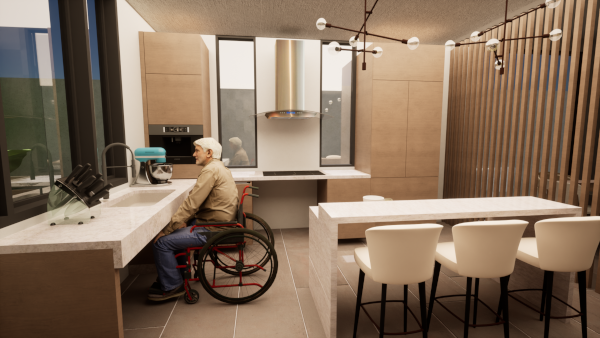
Many designs overlook access for people with reduced mobility. This mistake not only limits usability but also violates local and international regulations.
How to avoid it: Incorporate universal design principles from the beginning (minimum door widths, gentle slopes, unobstructed circulation) and conduct walk-through tests with all types of users.
2 Poor Lighting and Cold Environments
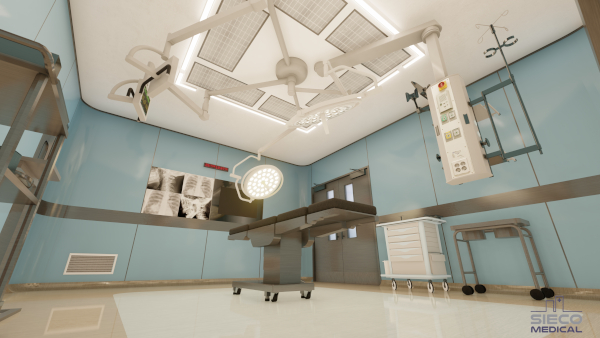
Badly planned lighting can create shadows, glare, or monotonous, unwelcoming spaces. The excessive use of white, without warm accents, can also distort the spatial perception.
How to avoid it: Strive for a balance between natural and adjustable artificial light, add task lighting in critical areas, and enhance the atmosphere with warm tones, natural materials, and soft finishes.
3 Poorly Conceived Layouts and Flows
Designing hospitals or clinics without analyzing traffic flow can lead to congestion, unnecessarily long routes, and crossover between staff, patients, and supplies.
How to avoid it: Conduct prior studies of optimal circulation paths and involve clinical staff from the start to validate real operational flows.
4 Improperly Sized Technical Systems (HVAC, Air Conditioning, Ventilation)
A recurring mistake in hospitals is using residential-type air conditioning units (like mini-split or VRF systems) in clinical areas without considering the technical requirements for thermal control, humidity, and air quality.
How to avoid it: Use specialized solutions for sterile environments, sized according to technical standards, and plan for maintenance, redundancy, and system monitoring.
5 Underestimating Future Expansion and Flexibility
A project without a growth vision can quickly become obsolete as demand, technology, or medical needs evolve. Modular design and multipurpose spaces make it possible to adapt without major reconstruction.
How to avoid it: Reserve areas for potential expansion, allow subdivisions without compromising structure, and use modular systems that can be reconfigured with minimal disruption.
6 Lack of Privacy and Acoustic Control
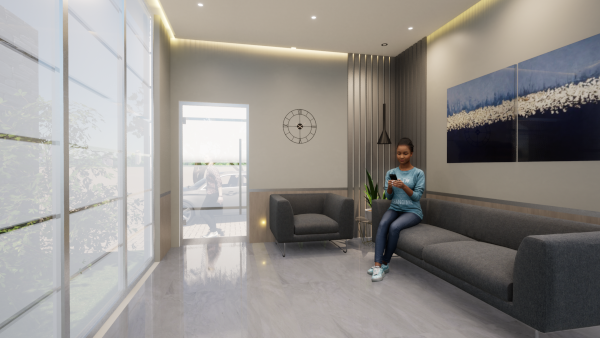
Privacy during consultations and noise control are essential to foster trust and comfort. Without proper spatial separation and acoustic treatment, both patients and staff may experience discomfort or exposure.
How to avoid it: Visually and acoustically separate care areas, use sound-absorbing materials, control noise transmission between adjoining spaces, and provide private rooms or booths where confidentiality is required.
Conclusion: A Comprehensive Approach Wins
Designing for health is not just about meeting codes or achieving aesthetic appeal—it’s about understanding the environment as a component of care, prioritizing function, safety, and the human experience.
At Sieco Medical Architecture, we specialize in creating projects that not only comply with regulations but also avoid these common mistakes from the very first line drawn—adapting to each client’s needs, both now and in the future.
Let’s talk about how we can develop your healthcare space.
SIECO MEDICAL ARCHITECTURE
Ing. Jorge Lucano Gutiérrez Caire – General Director
WhatsApp: +52 686 160 0455
Contact: +52 686 479 8206
Email: gerencia@gruposieco.org
Facebook: Sieco Medical
Instagram: @siecomedical