
BEYOND CHOLESTEROL: THE TEST THAT CAN REVEAL YOUR TRUE CARDIOVASCULAR RISK
For decades, cholesterol has been the main indicator used to assess the risk of cardiovascular disease. However, science has shown that it does not always tell the whole story. Today, a lesser-known test—the measurement of apolipoproteins—can provide a more accurate picture of the risk of suffering a heart attack or stroke.
The key players are two proteins: apolipoprotein A1 (ApoA1) and apolipoprotein B (ApoB). Although their names may sound unfamiliar, they play a fundamental role in cholesterol transport and can provide information that a conventional lipid profile does not always detect.
Much More Than Cholesterol
Fats cannot circulate freely through the blood. To do so, they need to bind to proteins called apolipoproteins, which are part of the lipoproteins responsible for transporting cholesterol and triglycerides throughout the body.
Among them, ApoA1 and ApoB are the most important from a cardiovascular standpoint, as they reflect the balance between the mechanisms that protect the arteries and those that promote atherosclerosis.
ApoA1: The Heart’s Ally
ApoA1 is the main protein in HDL cholesterol, known as “good cholesterol.” Its role is to remove excess cholesterol from tissues and arterial walls and carry it to the liver, where it can be eliminated.
For this reason, higher ApoA1 levels are generally associated with greater cardiovascular protection, while low levels increase the risk of coronary artery disease.
Lower levels of this protein are often associated with unhealthy habits such as smoking, physical inactivity, excess weight, an unhealthy diet, or poorly controlled diabetes.
ApoB: The True Silent Enemy
If ApoA1 represents the arteries’ cleanup system, ApoB reflects the number of particles capable of damaging the arteries.
This protein is found in lipoproteins that promote the formation of atherosclerotic plaque, including LDL (“bad cholesterol”), VLDL, and lipoprotein(a).
Most importantly, each of these lipoproteins contains only one ApoB molecule. Therefore, measuring this protein makes it possible to determine how many potentially harmful particles are circulating in the blood.
This explains why some people have normal LDL cholesterol levels and yet still have elevated cardiovascular risk: they may have an excessive number of atherogenic particles.
More and more specialists consider ApoB one of the most accurate markers for estimating cardiovascular risk.
Can These Levels Be Improved?
The answer is yes. The same habits that protect the heart also help increase ApoA1 and lower ApoB:
- Eat more fruits, vegetables, legumes, and whole grains.
- Choose healthy fats, such as olive oil, nuts, and oily fish.
- Reduce saturated fats and eliminate trans fats.
- Maintain a healthy weight.
- Get at least 150 minutes of moderate physical activity per week.
- Do not smoke and limit alcohol consumption.
A Tool for More Precise Prevention
Cardiovascular risk assessment is evolving. Today, what matters is not only how much cholesterol circulates in the blood, but also how many particles carry it.
For this reason, ApoB measurement is gaining prominence, especially in people with diabetes, obesity, metabolic syndrome, elevated triglycerides, or a family history of cardiovascular disease.
Ultimately, knowing your apolipoprotein levels can help identify risks that might go unnoticed with a conventional test and offers an additional opportunity to act before heart disease develops. Because in cardiovascular prevention, detecting risk early can make all the difference.
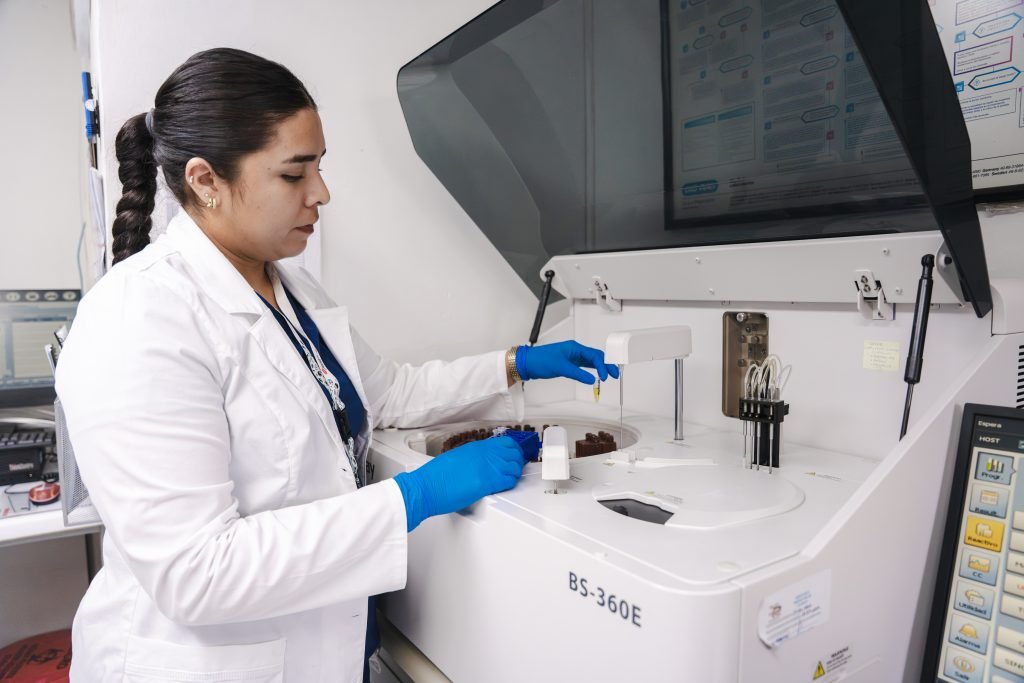
LABORATORIO DORADO – QFB MARTHA DORADO DEL RIO
We offer molecular biology, flow cytometry, microbiology, and clinical laboratory testing services.
Central Laboratory:
Address: Av. Álvaro Obregón #1500, Col. Nueva, MEXICALI, B.C.
Phone: (686) 552 3230
WhatsApp: (686) 279 6009
Clarion Hospital Branch:
Address: Av. Brasil #2859, Col. Alamitos, MEXICALI, B.C.
Phone: (686) 582 4660
Instagram: @laboratoriodoradomx
Facebook: Laboratorio Dorado